Andrew Goodwin's feels that traditional narrative analyses (using such ideas Todorov) don't really apply to pop videos, because pop video's aren't trying to be avant garde - it is just that they approach narrative from a different angle to novels and films.
The main reason for the different narrative structures is as followed:
1. Pop videos are built around song - and often songs do not pose traditional narrative structures 9 normality-problem-resolution).
2. The pop video uses a singer both as narrator and as a character.
3. The singer often looks directly at the camera - this is and extension of (music-hall) performance and trying to involve the viewer at home with performance.
Pop videos rely on repetition. Often video's repeat images in the same way music repeat choruses or lines. Also the repetition in songs of parts or rhythms of other song (intertextuality) means that we become familiar with the genre and have certain expectations. Lastly the video would be played on TV, the song would be played on radio and there might be a advertising film or TV tie-in making the song familiar through repetition.
There are three types of relations between songs and videos: Illustration, amplification and disjuncture.
1. Illustration: This where the videos tell the story of the lyrics "pap don't preach" (Madonna) for example. Dance is often used to express the feelings/moods in the song.
2. Amplification: Occurs when the video introduces new meanings that do not contradict with the lyrics but add layers of meaning.
3. Disjuncture: this where there is little connection between the lyrics and video or where contradicts the video contradicts the lyrics. Michael Jackson's Man In The Mirror is an example of this. The song is about self-realization but the video is full of radical world events.
I believe our music video to be Disjuncture, this is due to the fact that there is next to know relevance or connection between our song and music video, our song has no lyrics so its hard to fix a basis of a story for a music video with the song, as our song is purely instrumental. There is no repetition In our music video as there is in usual pop videos, our music video follows a story rather then repeating the video through the chorus. Our video isn’t built around the song in anyway really.
Wednesday, 10 November 2010

Monday, 8 November 2010
Analysis of album covers within our chosen genre

In the electronic genre of music, it seems that albums covers tend to copy the same few concepts.
These usually connotate the artist being bigger than anything else in the world, deadmau5 taking it to literal extremes through his use of the costume head filling the entire album cover.
The majority seem to focus on the artist themselves, the exception in this case being the Cross by Justice, which focusses on a symbol instead.
The other album covers, such as 09/17/2007/ EP by Danger, 4x4=12 by Deadmau5 and Alive 2007 by Daft Punk all features atleast a few elements, or even the artist themselves. Deadmau5 uses his mouse head as the central focus of his album cover, using his already established image just as Danger does with his album.
Although Danger's likeness is the central focus point of the album, it seems to try and place him in a more localized environment, perhaps relating him more to his audience?
Alive 2007 by Daft Punk uses a simplistic image of the duo's live stage set, as it is a live album, but through the use of font and colour is still recognizable as a Daft Punk album.
Overall, well established artists tend to use their image or elements of their visual style on their album covers to attract an existing audience, whilst introducing themselves to a new audience as a brand. Newer artists, such as Justice don't have an established brand, and have selected a concept that has became one of their staples of live gigs, rather than the reverse of Daft Punk's album cover. This stark contrast to the others , as it contains no information about the album, nor the artist, the only indication the audience knows that the album is by Justice is a symbol vaguely linked to them.
Using this research we've decided to focus more on the image relating to the product, as it gives the audience a clear understanding of what or product is.
Monday, 11 October 2010
Research on our chosen artist - Danger

Danger is a relatively unknown alias of french music producer Franck Rivoire, who specialises in chip tune music. He is currently signed on Ekler'o'shock label.
His target audience would be those generally interested in the Electro/Electronic genre, as his songs consist of many synthesisers and fit with the conventions of Electro music.
Although not much is known about Danger, he has toured across the globe, creating a style where he is mysterious, unknown and unheard of, yet well-known and played around the world. This may be due to his style which is likened to other Electro artists such as Deadmau5 and Daft Punk, never revealing his true identity yet gaining popularity through his mask.
History of the genre we are working within
The song that has been chosen for our music video is Danger – 4h30, this song may not be a big mainstream piece but we feel that it fits in well with the concept of out music video, this song fuses electronica with dance
History of Electronica
Electronica was created through developments in music technology, these include; electronic musical instruments, synthesizers, drum machines, music sequencers and digital music workstation
Even though Electronica became a sub genre to Bitpop, Electronic sounds began to form the basis of a wide array of popular music in the late 1970s, and further on to the 1980s and 90s, spawning popular bands like; Daft punk, New order, Kraftwerk, Petshop boys and U2
.
I believe this to be a neglected genre of music, because it isn’t really a genre that is heavily promoted on TV and popular radio stations because music is constantly changes and adapting to new more ‘’fashionable’’ scenes of music and as new music becomes popular other genres feel the neglect and become less popular this is why the 21st century
The image of electronica bands was not based on star appeal
In performance there was often simply members of the bands pressings button and uses pre recorded sounds on computers.
So the bands developed other methods to promote them selves.
This is a screen shot from youtube of Daft punk’s original music video around the world – the video is a bunch of different dancers moving and dancing to the beat of the song which fits well, then a bunch of ‘robot’ like dancers come in and this really plays to the whole electronic feel of the song, I believe it to be a good concept for the song, its entertaining to watch as much as the songs good to listen too. The lyrics are ‘’Around the world’’ on repeat and as there being sang the dancers are moving in a full circle around the stage like area, which is in the perfect followment to the lyrics
Analysis of Magazine Advertising for Music
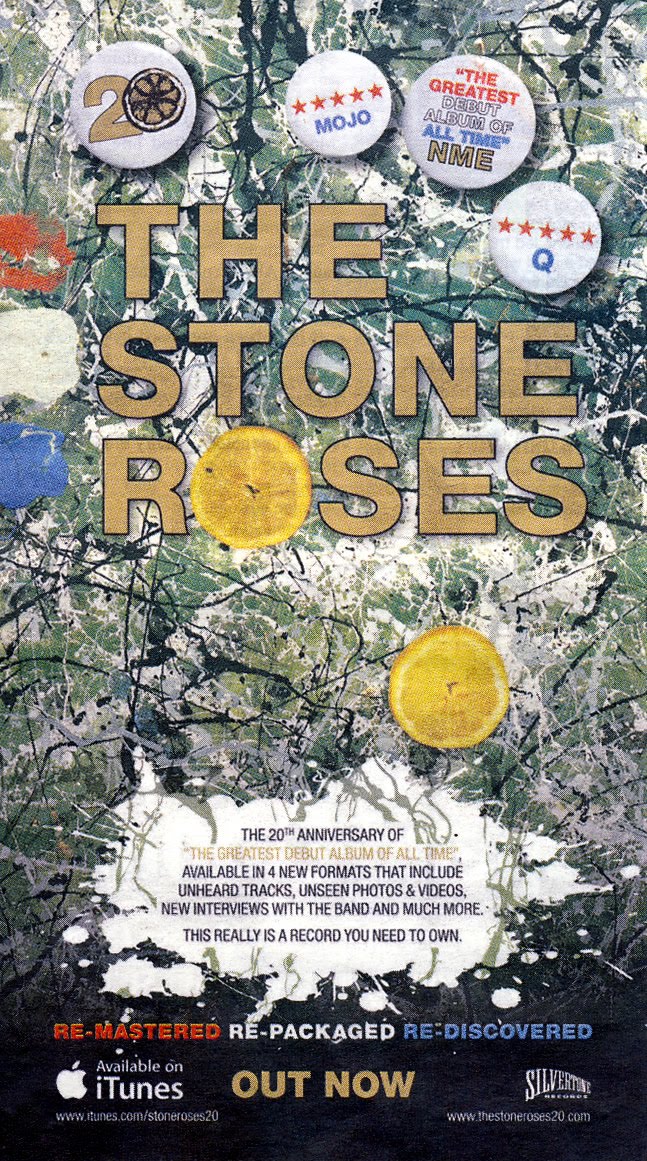

In my research of Advertisments for albums and singles, I have noticed that the format tends to lend itself into either of the following;
A bold image usually connotated with the album cover or infact is the album cover, usually accompanied by short strapline and review and release date.
The other way adverts tend to present themselves is depicting the band or artist themselves, using a well established brand, name or even image as the center-focus with details about their latest album below.
Both formats share essentially the same information, (Reviews, information on when it is released and a short description to entice the audience to purchase the product), and are yet so contrast to one another, depending on the genre of the artist of band themselves. The colours and font style usually reflect the artist or bands genre, usually atracting their target audience, as it's easily recognisable for them.
The advert to the right uses Gwen Stafani as the main focus of the advertisement, using a well established artist.
Whilst the magazine advert on the left depicts The Stone Roses but focusses upon alot more information and reviews compared to the poster to the right.
Analysis of Digipak format packaging

DigiPak is a format commonly reffered to "book like"designs of CD cases. These usually consist of 4 panels - A front, back, inside cover and inside back cover which fold out along with a spine
Usually, 2 extra sides are added to special editions of digipaks.
An advantage over CD's is that in most cases, artists will include a booklet only within a digipak, offering listeners a closer insight into the working of the album, even offering lyrics to all the songs on the album. A short biography of the band is also sometimes included in digipaks.
Usually, 2 extra sides are added to special editions of digipaks.
An advantage over CD's is that in most cases, artists will include a booklet only within a digipak, offering listeners a closer insight into the working of the album, even offering lyrics to all the songs on the album. A short biography of the band is also sometimes included in digipaks.


Subscribe to:
Posts (Atom)